

October 15, 2026 · 7 min read
Corporate Event Budget Template and Planning Tips
Build a corporate event budget with core line items, venue and AV cost estimates, contingency, sign-off tips, and a free template.
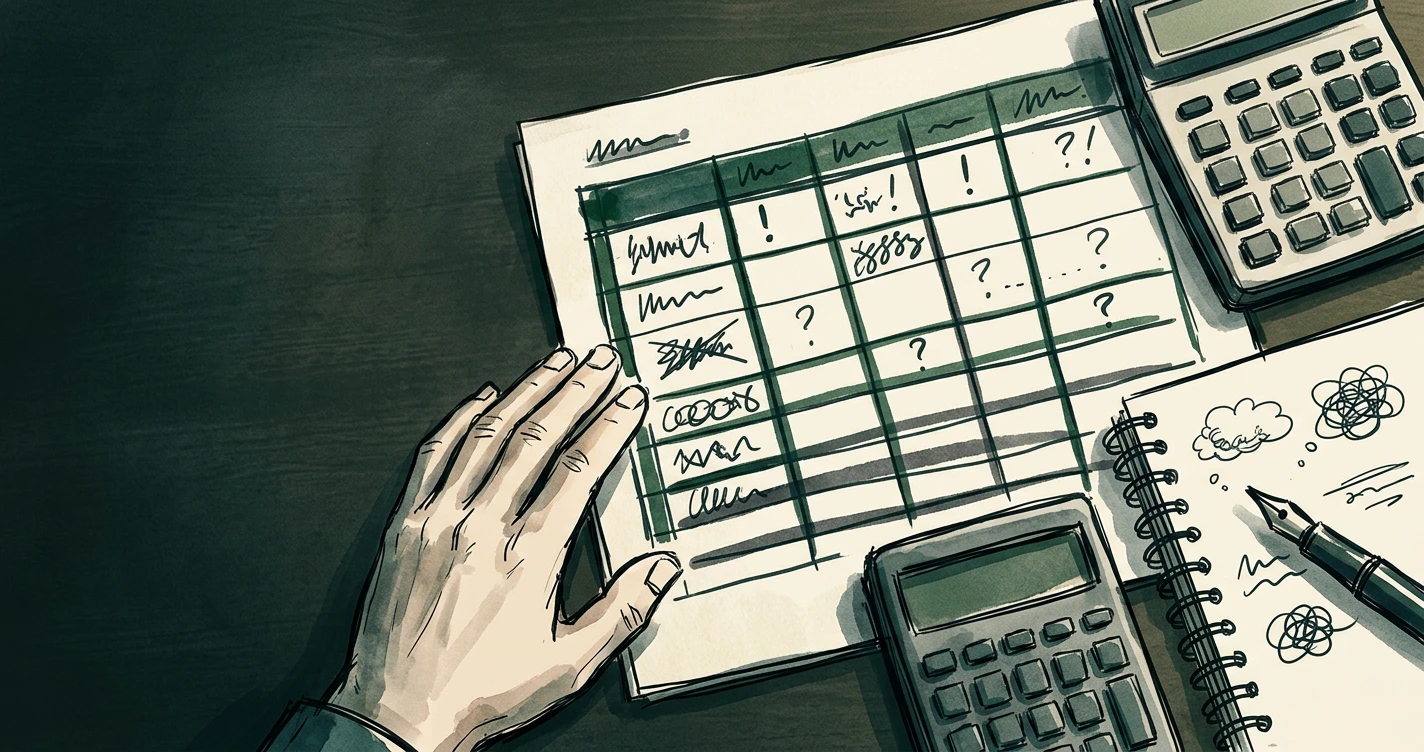
Start your corporate event budget with the fixed line items first, because the venue, catering, and audio/visual will consume most of the money and everything else sizes around them. Once those three are estimated from real quotes, you layer in staffing, marketing, travel, and a contingency, and you have a plan you can defend to anyone who signs the cheque.
A corporate event budget is simply a structured estimate of every cost your event will incur, organised so you can model different headcounts, compare quotes, and track what you actually spend against what you planned. Get the structure right and the rest is arithmetic. This guide walks through the core line items, how to estimate the big three categories, how much contingency to hold back, how to win sign-off, and how to keep spend on track, plus a template you can copy and use today.
The stakes are real. Business events generated roughly 1.3 trillion dollars in direct spending globally in 2025, according to the Events Industry Council and Oxford Economics, with corporate and business events the single largest category of that spend. Even a modest internal event is a line on someone's financial report.

Core line items every corporate event budget needs
Build your budget around two groups: fixed costs that stay roughly the same regardless of attendance, and variable costs that rise with every extra head. Separating them lets you answer the question every finance team asks, which is what happens to the total if we invite 50 more people.
Here is the standard line-item list for a corporate event:
- Venue rental including any deposit, cleaning fee, and overtime charges.
- Food and beverage covering meals, breaks, drinks, and service charges.
- Audio/visual for sound, screens, lighting, livestream, and technicians.
- Staffing including planners, registration staff, security, and on-site crew.
- Marketing and registration for the event page, email, and ticketing fees.
- Travel and accommodation for speakers, VIPs, and your own team.
- Speaker, entertainment, or facilitator fees.
- Printing and signage for badges, banners, and wayfinding.
- Technology and tooling for your planning software and any on-site apps.
- Contingency held back for surprises, covered in its own section below.
Not every event needs every line, but starting from the full list means you never discover a forgotten cost after approval. For a deeper walkthrough of the moving parts beyond money, the complete corporate event planning guide covers timelines and logistics alongside the budget.
Estimating costs for venue, catering, and AV
These three categories decide most of your total, so estimate them first and with real numbers rather than guesses. Food and beverage typically lands as the largest single line, with audio/visual close behind, and the two together can easily pass half your spend.
Venue. Get written quotes from at least three options and read past the headline rental fee. Ask specifically about service charges, mandatory in-house catering minimums, security requirements, and overtime rates, because those extras are where a cheap-looking venue becomes expensive. If the venue requires you to use its own caterer or AV supplier, factor those quotes in before you compare.
Catering. Price catering per head, then multiply by your expected headcount and add the service charge and tax on top. A plated dinner costs far more than a buffet or a drinks reception, so decide the format before you estimate. Build the number from a confirmed menu quote, not a rough per-person figure you remember from a past event.
Audio/visual. AV is the line planners underestimate most often, because a simple room setup and a full production with livestream, lighting, and multiple technicians are completely different numbers. Ask your venue what is included, since in-house AV is sometimes bundled and sometimes billed separately at a premium. Confirm whether you need a technician on site for the full day, as crew time adds up quickly.
A useful sanity check is cost per attendee. Divide your draft total by expected headcount and compare it to similar events your company has run. If the number looks wildly high or low, you have probably missed a line or double-counted one.
Building in contingency for surprises
Add a contingency line of 10 to 15 percent of your total budget, and treat it as a real reserve rather than a rounding note. Events move: catering counts rise, the AV brief grows, a flight gets rebooked, and a venue adds a charge you did not expect. The contingency is what absorbs all of that without a panicked email to finance.
Lean toward the higher end of that range when the event is new, the logistics are complex, or international travel is involved, since unfamiliar territory produces more surprises. For a repeat event where you have last year's actuals to work from, 10 percent is usually enough.
One discipline matters more than the exact percentage: name an owner for the contingency and require a reason to spend it. A reserve with no gatekeeper quietly becomes part of the base budget. Keeping it visible as a separate line also reassures approvers that you have planned for the unexpected rather than hoping it away. Many of the overruns people blame on bad luck are really common event planning mistakes that a contingency and a checklist would have caught.
Getting budget sign-off from stakeholders
Lead with one number. Approvers do not want to read a 40-row spreadsheet, so open with the total, the per-attendee cost, and the business outcome the event is meant to deliver, then keep the detail available underneath for anyone who asks.
Three things speed up a yes:
- A clear total and per-head cost, so the approver can benchmark it against other spend without doing maths.
- A link to an outcome, whether that is pipeline, retention, recruitment, or culture, because a cost tied to a result is far easier to approve than a cost on its own.
- A visible contingency line, which signals that you have accounted for surprises and will not be back next month asking for more.
Present the budget as a tidy one-page summary first and share the full breakdown as backup. If sign-off involves several people, give them a single shared version to comment on rather than emailing competing spreadsheets, which is how two approvers end up working from different totals.
Tracking actual spend against the plan
Track spend as it happens, in one shared place, not after the invoices land. The gap between your estimate and reality only becomes useful if you can see it while there is still time to act on it.
Set up three columns against every line item: budgeted, committed, and actual. Budgeted is your estimate, committed is money you have promised through a signed quote or deposit, and actual is what has been invoiced and paid. Committed is the column people forget, and it is the one that stops you from spending a reserve you have already quietly used up.

A dedicated event planning tool keeps the budget beside the rest of the project instead of in a spreadsheet nobody updates. Wdplan puts budgets, tasks, calendars, guest lists, and vendor management in one place, so the number you show a stakeholder is the same number your team is working from, and a change to a vendor quote updates the plan rather than sitting in someone's inbox.
Review the three columns weekly in the run-up, and after the event, save your actuals. Last year's real numbers are the fastest way to build next year's estimate.
Downloadable corporate budget template
You can build a working template in any spreadsheet in a few minutes. Create a sheet with these columns across the top, then one row per line item:
- Category (venue, catering, AV, and so on)
- Description
- Unit cost
- Quantity (per head or flat)
- Budgeted
- Committed
- Actual
- Variance (budgeted minus actual)
- Notes
Group the rows under the ten line-item headings above, add a subtotal row, then add a contingency row at 10 to 15 percent of that subtotal, and a grand total at the bottom. Build a small summary block at the top showing total budget, expected headcount, and cost per attendee, since that is the view your stakeholders will actually read.
If you would rather keep the budget connected to your tasks, vendors, and guest list instead of a standalone file, build it inside a planning tool that does all of it together. Wdplan offers a free sample event you can explore before paying, which is enough to set up your line items and see the whole structure working before you commit.
Start with the line-item list, get three real quotes for your biggest categories, hold back a contingency, and put the whole thing somewhere your team and your approvers can see the same number. Open a budget today, even a rough one, because the earliest version is the one that saves you the most money later.