

October 23, 2026 · 7 min read
Build a Wedding Day Timeline That Runs Smoothly
Build a wedding day timeline that keeps your day calm: how to map every hour, add buffer time, brief vendors, and recover from delays.
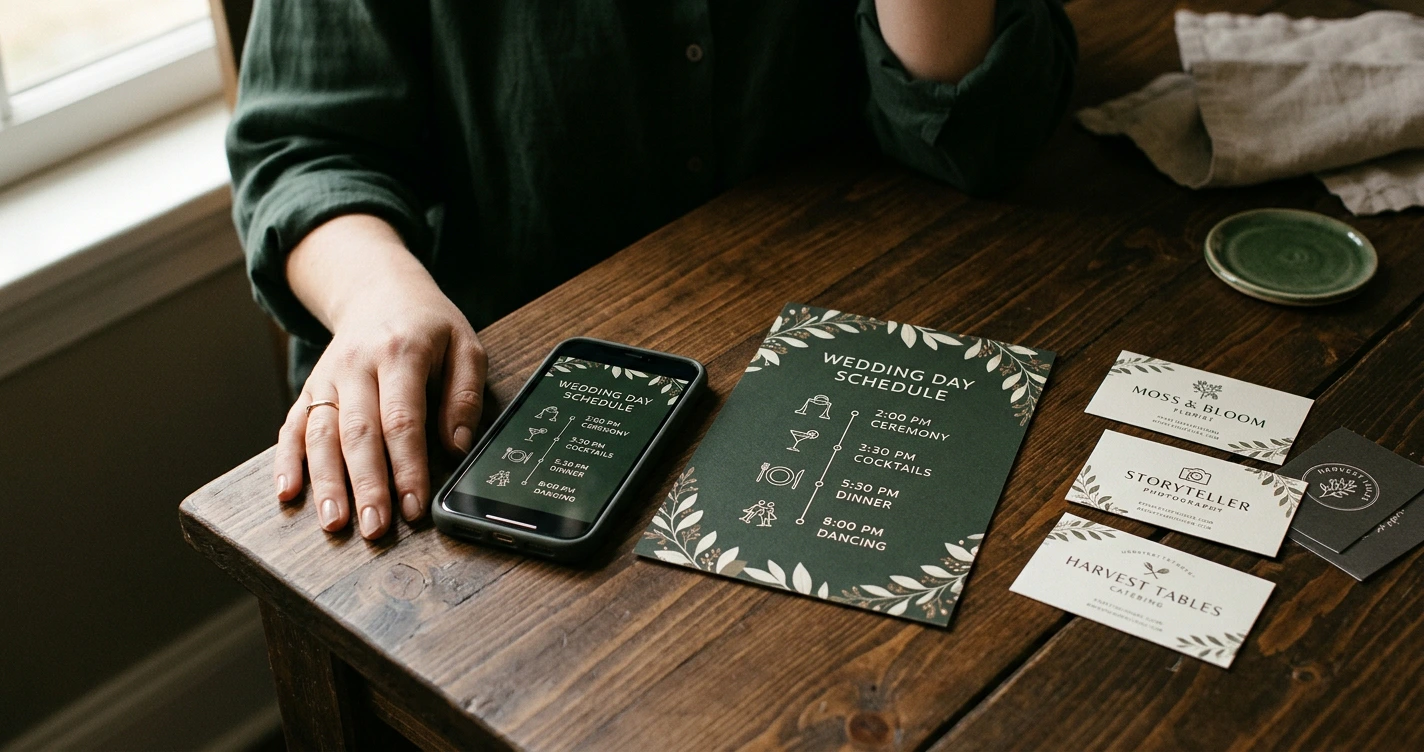
Start your wedding day timeline by working backwards from the one time you cannot move: the ceremony start. Lock that hour first, then schedule everything before and after it, because every photo, hair appointment, and vendor arrival has to clear the path to the aisle. A good wedding day schedule is a running order, not a wish list, and the couples who feel calm on the day are the ones who built one early and shared it widely.
The reason the timeline matters so much is scale. The average wedding now involves 117 guests and 13 hired professionals, according to The Knot Worldwide's 2026 Real Weddings Study (The Knot Worldwide, 2026). That is a small company's worth of people moving through your day, and none of them can coordinate without a single source of truth. This guide walks you through building that document stage by stage.
Mapping the Day From Getting Ready to Send-Off
Map your wedding day timeline in two directions from the ceremony. Work backwards to cover hair, makeup, dressing, and first-look photos, then work forward through the cocktail hour, dinner, speeches, dancing, and send-off. Fixing the ceremony time first keeps the whole sequence anchored, because that is the one moment your officiant and venue have already booked.

List every stage as a block with a start time and a duration, not just a single clock time. A ceremony is roughly 20 to 30 minutes for a civil service and longer for a religious one, a cocktail hour is usually a full 60 minutes, and a plated dinner runs 60 to 90 minutes. Writing durations rather than fixed points makes it obvious where the day is tight and where you have room to breathe.
Most couples place the ceremony in the late afternoon so the light is soft for photos and the evening is free for the reception. If you want a first look before the ceremony, add it to the getting-ready block, since it saves time later and lets you join your own cocktail hour. For the bigger planning picture around this single day, see The Ultimate Wedding Planning Timeline.
Why Buffer Time Protects Your Wedding Day Schedule
Add 15 to 30 minutes of buffer after getting ready, after each photo session, and around any travel, because these three stages are where wedding days quietly fall behind. A timeline with no slack assumes everything starts on the minute, and weddings rarely do. The padding is what absorbs a late hairstylist or a long group-photo list without touching your ceremony start.
Getting ready almost always takes longer than couples expect, especially with a full wedding party cycling through hair and makeup. Photos stretch too, since family group shots multiply fast once relatives start suggesting combinations. Travel between a separate ceremony and reception venue needs its own padded block, including the time guests spend parking and finding seats.
Think of buffers as insurance you hope not to use. If the day runs on time, that reclaimed half hour becomes extra minutes with your guests or a quiet moment with your new spouse. If it does not, the buffer is the difference between a relaxed adjustment and a visible scramble.
Coordinating Vendors Around the Schedule
Give every vendor the same master timeline, with their specific arrival, setup, and performance times highlighted. With an average of 13 professionals hired per wedding (The Knot Worldwide, 2026 Real Weddings Study), each one needs to know not just when they work but how their slot connects to the others. The photographer's first-look window, the florist's setup, and the caterer's dinner service all depend on the same clock.
Confirm three details with each vendor a week out: arrival time, how long they need to set up or break down, and who they should find when they get there. A photographer who arrives during getting ready, a DJ who needs an hour to load in, and a florist who has to finish before guests enter all have different lead times that have to be sequenced, not guessed.
Keep all of this in one shared place rather than scattered across emails and texts. A tool like Wdplan lets you hold the timeline, guest list, and vendor contacts together, so a last-minute change reaches everyone looking at the same document. For a deeper walkthrough of managing suppliers, read Wedding Vendor Management Made Simple.
Sharing the Timeline With Your Wedding Party
Send your wedding party a simplified version of the timeline that shows only what they need to do and when. The full vendor schedule will overwhelm them, so give bridesmaids, groomsmen, and family members a clean list of their arrival times, photo call times, and any duties like signing as a witness or giving a toast. Clear expectations prevent the most common morning-of question: where am I supposed to be?
Name one point person who holds the complete timeline and fields all logistical questions on the day. This is the single most useful decision you can make, because it means neither you nor your partner becomes the help desk at your own wedding. A day-of coordinator is ideal, but a calm, organized friend with every vendor's phone number works too.
Share the schedule a few days ahead so there is time for questions, not on the morning itself. If your celebration spans people in different languages, a shared digital timeline everyone can open on their phone beats a printed sheet that only exists in one place.
Handling Delays Without Panic
Treat small delays as normal and protect only the fixed points: the ceremony, meal service, and any timed moments like sunset photos or a venue curfew. When one stage runs long, absorb it from a flexible block rather than pushing everything back. Open dancing and mingling can stretch or shrink, so they are where you recover lost minutes without anyone noticing.
Decide in advance what you are willing to cut if the day compresses. Maybe the extended family photo list gets trimmed, or the receiving line becomes table visits during dinner. Making those calls while calm, rather than under pressure, means your point person can act on them without tracking you down.
What derails a day is not the delay itself but the scramble to respond. A clear timeline and a single decision-maker turn a 20-minute overrun into a quiet adjustment. The calmer you keep the people around you, the less any single delay registers with your guests.
A Sample Hour-by-Hour Wedding Day Timeline to Adapt
Use this sample wedding day schedule as a starting point and shift the times to match your ceremony hour and venue rules. It assumes a late-afternoon ceremony and a single venue; add a padded travel block if your ceremony and reception are in different places.
- 10:00 a.m. Hair and makeup begin for the wedding party
- 1:00 p.m. Couple and party dressed; vendors arriving and setting up
- 1:30 p.m. First look and couple portraits
- 2:15 p.m. Wedding party and family photos
- 3:00 p.m. Photos done; everyone out of sight as guests arrive (buffer built in)
- 3:30 p.m. Ceremony begins
- 4:00 p.m. Ceremony ends; cocktail hour starts, couple finishes any remaining photos
- 5:00 p.m. Guests move to the reception; grand entrance
- 5:15 p.m. Dinner service
- 6:30 p.m. Speeches and toasts
- 7:00 p.m. First dance, then open dancing
- 9:30 p.m. Cake cutting or late-night snack
- 10:30 p.m. Send-off
Three in four couples say their wedding was worth the investment (The Knot Worldwide, 2026 Real Weddings Study), and a timeline is how you make sure the day you paid for actually unfolds the way you pictured it. Build your version now, while you have time to think clearly, rather than piecing it together in the final week.
Open a free sample event in Wdplan and draft your running order today. Add your stages, assign your point person, and share it with your wedding party and vendors, so the only thing left to do on the day is enjoy it.