

October 7, 2026 · 7 min read
How to Plan a Wedding on a Budget
How to plan a wedding on a budget: set a realistic total, cut guest-list costs, pick off-peak dates, DIY smartly, and track every euro.
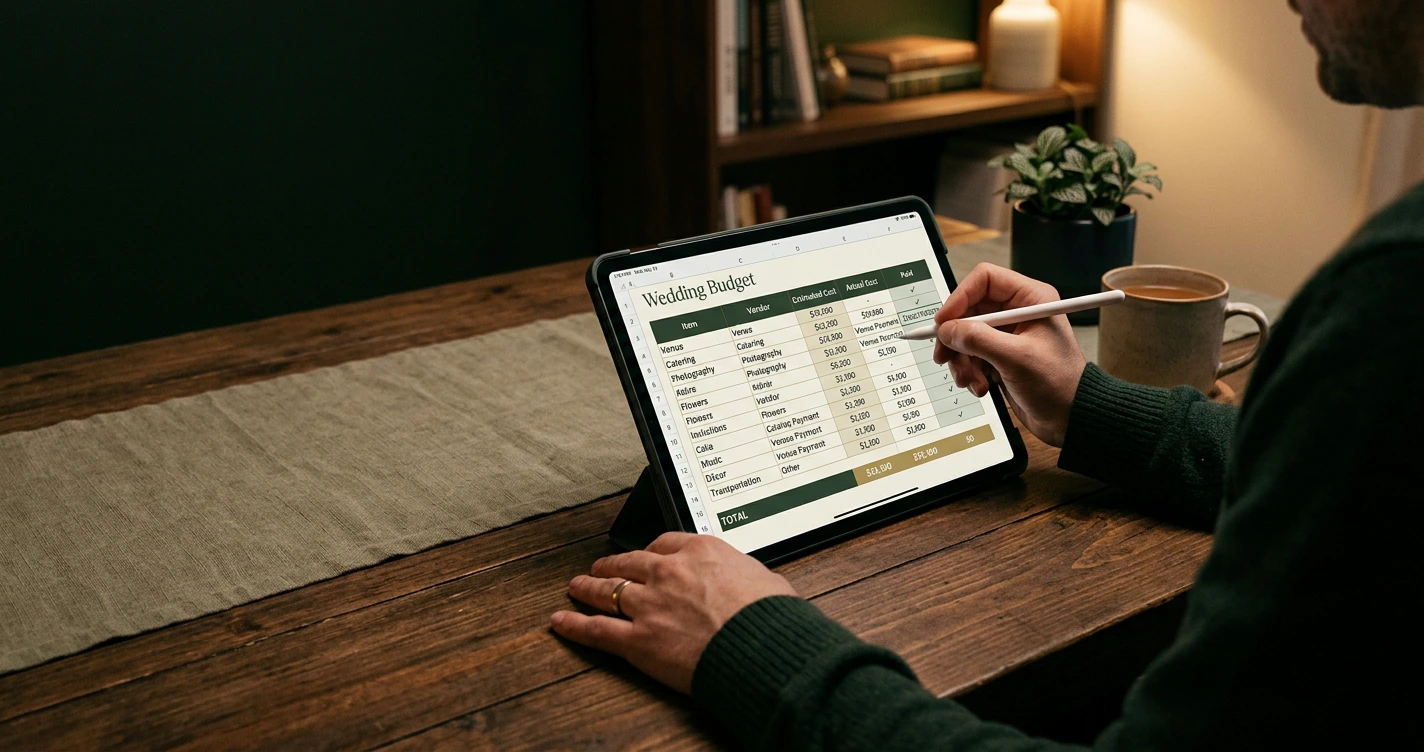
Set your total first, before you fall in love with a single venue or dress, because every other decision gets easier once you know the ceiling. A beautiful wedding on a budget comes down to four moves: fund your real priorities, keep the guest list tight, choose a cheaper date, and track every euro as you spend it.
This guide walks you through each one. The average US wedding now runs about $34,000 for roughly 117 guests, according to The Knot Worldwide's 2026 Real Weddings Study, which works out to around $292 per guest. You do not have to spend anything close to that, and these budget wedding tips show you where the money actually goes so you can redirect it.

How to plan a wedding on a budget: set a realistic total and prioritise what matters
Decide the number before you browse, because a figure chosen after you have seen a dream venue is just a wish. Add up what you can comfortably contribute, what family has firmly offered, and what you can save before the date, then stop there.
Next, split that total by what you care about most. List every category, then rank it: ceremony, venue, food and drink, photography, attire, flowers, music, stationery, and the small extras that add up fast. Fund the top three generously and let the rest live on whatever is left.
A fair starting split for most couples looks like this:
- Venue and catering: roughly half the budget, since it is almost always the largest line.
- Photography and video: 10 to 15 percent, because this is what you keep afterwards.
- Attire, hair, and makeup: around 10 percent.
- Flowers and decor: 8 to 10 percent.
- Music or entertainment: 8 to 10 percent.
- Stationery, favours, and a contingency cushion: the remainder.
Keep 5 to 10 percent unallocated from the start. Hidden costs, from service charges to the extra bottle of corkage, will find you, and a cushion means they do not blow the whole plan.
Trim the guest list to save the most
Cut the headcount before you cut anything else, because the guest list is the single biggest lever you control. Almost every major cost scales per person: catering, rentals, invitations, favours, and even the size of venue you need. With the US average near $292 per guest, every name you remove is real money back in the pot.
Build the list in three tiers. Tier one is the people you cannot imagine the day without. Tier two is close friends and wider family. Tier three is the "would be nice" names: distant relatives, plus-ones for casual dates, work colleagues. Invite top down until you hit your number, and hold tier three in reserve.
A few rules keep the list honest:
- Set a clear plus-one policy and apply it evenly, so no one feels singled out.
- Decide early whether children are invited, and say so plainly on the invitation.
- Resist the obligation invite. A guest you feel you "should" ask is a guest you are paying for twice, in catering and in seats.
If the etiquette feels delicate, our guide to wedding guest list etiquette for plus-ones and kids covers the awkward cases in detail. A tighter list usually makes for a warmer celebration, with the people who matter most actually in the room.
Choose off-peak dates and flexible venues
Move the date, and the price moves with it. Venues and vendors charge a premium for Saturdays in peak summer, so a Friday, a Sunday, or a date outside the busy season can save a meaningful share of the total for the exact same day.
Ask every venue for its off-peak and weekday rates directly, because they are rarely advertised. The savings often extend to vendors too: photographers, bands, and caterers with open weekday calendars are more willing to negotiate.
Look beyond the obvious wedding venues as well. A flexible space often costs far less than a dedicated wedding venue that bundles in fees you do not need:
- Community halls, galleries, and historic buildings that let you bring your own caterer.
- Restaurants with a private room, where the food is the venue cost.
- A family garden or a friend's property for a true DIY reception.
When you compare spaces, weigh the all-in cost, not the headline hire fee. A cheap room that forces you onto an expensive in-house caterer can cost more than a pricier venue that lets you shop around.
DIY the elements that look expensive but aren't
Handle the high-markup, low-skill items yourself, and leave the specialist work to professionals. The goal is to spend your time where it saves the most money for the least risk.
Good DIY candidates:
- Stationery. Design and print your own invitations, menus, and place cards, or send digital invitations to cut printing and postage entirely.
- Favours and signage. Simple, well-made favours beat expensive ones, and a single hand-lettered welcome sign reads far more generous than it costs.
- Centrepieces. Seasonal flowers in simple vessels, greenery, or candles create plenty of impact for a fraction of a florist's full package.
- The playlist. A curated playlist and a decent speaker can replace a DJ for a relaxed reception.
Leave photography, the cake, and anything structural or safety-related to people who do it for a living. A failed DIY on the one thing you cannot redo is a false economy.
Keep the DIY list short and realistic. Three projects you finish calmly beat ten that pile stress onto the final week.
Negotiate with vendors and avoid overspend
Get every quote in writing, then compare them on the same terms, because a low headline price often hides service charges, overtime rates, and travel fees. Ask each vendor for the full, all-in figure before you fall for the package.
Negotiation is normal, and most vendors expect it. A few approaches that work:
- Ask what a weekday or off-season booking changes. Many vendors flex on date, not on quality.
- Book fewer hours rather than a cheaper tier, so you keep the quality and trim the time.
- Bundle where it helps. A photographer who also does video, or a venue that includes tables and chairs, can beat two separate bills.
- Say your number plainly. "This is our budget for flowers; what can you do within it?" gives a vendor room to shape a package rather than walk away.
Read every contract before you sign, and watch for the quiet extras: cake-cutting fees, corkage, cleaning charges, and gratuities that are not included. These are where budgets quietly leak. Surveys of recent couples consistently find that a large majority end up spending more than they first planned, and unlisted extras are a common reason.
Track each deposit the moment you pay it. A quote you agreed to in March is easy to forget by June, and a signed contract you have not logged is a surprise waiting to happen.
Use a live budget tracker to stay in control
Swap the static spreadsheet for a budget that updates as you commit money, because a plan you revise once a month is a guess by week three. The difference between couples who stay on budget and couples who overshoot is usually visibility: knowing, at any moment, what is quoted, what is paid, and what is left.
A good live tracker does three things:
- Shows your total, your allocations, and your remaining balance in one view.
- Separates estimated costs from confirmed deposits so you are never surprised by a balance due.
- Updates in real time as you log each quote and payment.
This is exactly where an all-in-one planner earns its place. Wdplan keeps your budget, guest list, RSVPs, tasks, and seating in a single dashboard, so when you remove a guest the knock-on cost is visible immediately, and when you pay a deposit the remaining balance updates on the spot. You can explore a free sample event before committing, and a single wedding runs a one-off fee rather than a subscription.
Because the guest list and budget live together, the two biggest levers in this guide, headcount and spend, stay connected instead of drifting apart in separate files. When you are ready to seat everyone, the same tool handles your wedding seating chart step by step without a separate app.
Start with the number, not the venue
Pick your total this week, split it by priority, and draft your guest list in tiers before you book anything. Those three steps decide most of what you will spend, and doing them first means every later choice fits a plan instead of fighting one. Open a live budget, log your first real quote, and let the running balance keep you honest all the way to the day.